
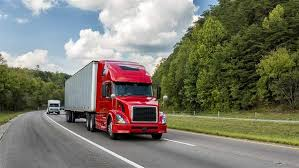
If you run a tractor-trailer out of Cleveland, the right policy is not just paperwork. It keeps your authority active, your loads moving, and your business standing after a bad day on I-90. Semi-truck insurance protects your rig, your trailer, the freight behind you, and the people sharing the road with you.
Northeast Ohio is one of the busiest freight corridors in the Midwest. Steel coils roll out of the Flats, auto parts move between suppliers in Cuyahoga and Lorain counties, and dry vans run nonstop between Cleveland, Columbus, Pittsburgh, Detroit, and Chicago. Every one of those miles carries risk, and every shipper, broker, and regulator wants proof that you are covered before a wheel turns.
At Cleveland Commercial Truck Insurance, we help owner-operators and fleets across Cleveland and northern Ohio build coverage that fits how they actually run. In this guide, we break down what semi-truck insurance covers, which limits Ohio and federal rules require, what drives your premium in Cuyahoga County, and the exact steps to get insured fast.
Whether you are launching a new authority, leasing on to a carrier, or growing a ten-truck fleet out of Brook Park or Bedford Heights, this is your playbook for semi-truck insurance.
How Cleveland’s Roads and Weather Shape Your Semi-Truck Insurance
Insurers price risk by location, and Cleveland has a profile all its own. Knowing it helps you understand the questions underwriters ask and how to present your operation in the best light.
Interstate congestion and urban driving
Cleveland sits at the junction of I-90, I-71, I-77, I-480, I-490, and I-271, with the Ohio Turnpike running just to the south. The downtown Innerbelt, the I-77 and I-490 interchange, and the stretch of I-480 near Hopkins International Airport see heavy truck traffic and frequent construction. Dense traffic means more lane-change incidents, more rear-end collisions, and more liability exposure.
City deliveries add another layer. Tight docks in Ohio City, narrow streets near the Warehouse District, and older industrial yards in Slavic Village and along the Cuyahoga River raise the odds of low-speed property damage claims, such as clipped poles, torn awnings, and backing accidents.
Lake-effect snow and the Snowbelt
Lake Erie produces some of the toughest winter driving in the country. The eastern suburbs, along with Lake and Geauga counties, sit in the heart of the Snowbelt, where squalls can drop several inches of snow per hour. Jackknifes, slide-offs, and multi-vehicle pileups on I-90 east of downtown are a real concern, and underwriters know it. Strong semi-truck insurance for Cleveland carriers should account for comprehensive and collision losses tied to ice, snow, and road salt.
Freight that defines Northeast Ohio
The Port of Cleveland moves steel, project cargo, and bulk materials through the Great Lakes. Steel mills, metal fabricators, auto parts suppliers, chemical plants, and food distributors keep flatbeds, step-decks, tankers, and reefers busy year-round. Heavy steel coils raise cargo and securement concerns. Refrigerated freight needs reefer breakdown protection. Fuel and hazmat loads require much higher liability limits.
What this means for you
Your garaging address, operating radius, and the freight you haul all feed directly into your rate. A carrier running local dump loads around Parma has a very different risk profile than a long-haul dry van running Cleveland to Dallas. The best semi-truck insurance program reflects those differences instead of forcing you into a one-size-fits-all policy.
Required Semi-Truck Insurance Coverage in Ohio
Before you can legally haul for hire, you need specific coverage and filings in place. The rules depend on whether you cross state lines and what you haul.
Primary auto liability
Primary liability is the foundation of every policy. It pays for bodily injury and property damage you cause to others in an at-fault accident. It does not cover your own truck or cargo.
For interstate for-hire carriers hauling general freight in vehicles over 10,001 pounds, the Federal Motor Carrier Safety Administration (FMCSA) requires at least $750,000 in liability. Oil haulers need $1 million, and many hazardous materials require $5 million. In practice, most brokers and shippers in Northeast Ohio expect $1 million, so that is the limit we usually recommend for semi-truck insurance in Cleveland.
Ohio intrastate requirements (PUCO)
If you haul for hire only within Ohio, such as between Cleveland, Akron, and Toledo, you answer to the Public Utilities Commission of Ohio (PUCO). For-hire intrastate carriers need a Certificate of Public Convenience and Necessity (CPCN), and general freight carriers over 10,001 pounds must carry at least $750,000 in liability. Your insurer files a Form E with PUCO to prove coverage. If that filing lapses, PUCO can suspend your authority.
Federal filings and registrations
Interstate carriers need a USDOT number and MC authority, plus these key filings:
- BMC-91 or BMC-91X: Proof of liability coverage filed with FMCSA to activate your authority.
- MCS-90 endorsement: Attached to your policy to guarantee payment of public liability claims.
- BOC-3: Names a process agent in every state where you operate.
- UCR: The annual Unified Carrier Registration, which Ohio participates in.
Cargo coverage
FMCSA no longer requires motor truck cargo coverage for most general freight carriers, but nearly every broker does. Most load boards and shipper contracts list $100,000 in cargo as the minimum. Without it, your semi-truck insurance may satisfy regulators yet still keep you off the best-paying freight.
Our team handles the insurance filings as part of your semi-truck insurance setup and helps you coordinate the rest, so your authority goes active as quickly as possible.
Recommended Coverage to Round Out Your Semi-Truck Insurance
Meeting the minimum keeps you legal. It does not always keep you in business after a major loss. These coverages turn a bare-bones policy into real protection.
Physical damage
Collision pays when your tractor or trailer is damaged in a crash. Comprehensive covers theft, fire, vandalism, hail, falling objects, and deer strikes, a real risk on rural routes through Medina and Portage counties. If your equipment is financed or leased, your lender will require both. A new sleeper tractor can cost $150,000 or more, so this is not a line to skip.
Non-trucking liability (bobtail)
If you are leased to a motor carrier, its policy usually covers you while under dispatch. Non-trucking liability fills the gap when you drive for personal use, such as heading home to Euclid after dropping a load.
Trailer interchange
Pulling a trailer you do not own under a written interchange agreement? This coverage pays for physical damage to that trailer while it is in your care.
General liability
General liability handles non-driving claims, such as a slip-and-fall at your yard or damage while loading at a customer’s dock. Many Cleveland shippers require it before signing a contract.
Reefer breakdown
Food and pharmaceutical haulers need this to pay for spoiled freight when a refrigeration unit fails.
Workers’ compensation and occupational accident
Ohio is a monopolistic workers’ compensation state, so employers buy coverage through the Ohio Bureau of Workers’ Compensation rather than a private insurer. Owner-operators outside that system often add occupational accident coverage for medical bills and lost income after an on-the-job injury.
Umbrella and excess liability
Large jury verdicts against trucking companies keep climbing. An umbrella policy adds limits above your primary liability, protecting your assets and helping you qualify for high-value contracts.
Rental reimbursement and downtime
When your truck is in the shop, you are not earning. Rental reimbursement or downtime coverage helps replace that lost revenue.
The right mix depends on your operation. We review each option with you so your semi-truck insurance covers real risks without paying for coverage you will never use. A strong semi-truck insurance package also makes you more attractive to brokers because it signals a professional carrier. Think of semi-truck insurance as a business tool, not just a legal requirement.
How Much Does Semi-Truck Insurance Cost in Cleveland?
There is no single price, but owner-operators with their own authority commonly pay somewhere around $12,000 to $25,000 or more per year for a full package. New authorities usually land toward the higher end for the first year or two. Every quote for semi-truck insurance starts with the same core rating factors:
| Rating factor | Why it moves your premium |
|---|---|
| Years in business | Carriers with two or more years of clean history get access to more markets and better pricing. |
| Driver experience and MVR | Most insurers want two years of CDL experience. Tickets and at-fault accidents raise rates fast. |
| CSA scores and inspections | High BASIC scores and out-of-service violations signal risk to underwriters. |
| Operating radius | Local and regional runs often rate differently than long-haul, coast-to-coast lanes. |
| Cargo type | Steel, hazmat, fuel, and high-value freight cost more to insure than dry goods. |
| Equipment value | Newer, pricier trucks and trailers mean higher physical damage premiums. |
| Garaging location | Dense urban areas with more traffic and claims typically rate higher than rural counties. |
| Limits and deductibles | Higher liability limits cost more; higher deductibles can lower physical damage premiums. |
Cleveland-specific pricing factors
Cuyahoga County combines heavy traffic, congested interchanges, and lake-effect winters. Those conditions can push rates above what a carrier garaged in a rural Ohio county might pay. That is why two carriers on the same street can get very different semi-truck insurance quotes: the driver, the freight, and the history behind each truck matter just as much as the ZIP code.
The good news is that the market is competitive. Because we shop multiple carriers, we can find the company that prices your risk most fairly, which is often the fastest way to lower the cost of semi-truck insurance without cutting coverage.
Premium ranges are general estimates for planning purposes. Your actual rate depends on your specific operation and underwriting.
8 Ways to Lower Your Semi-Truck Insurance Premiums
You cannot change Cleveland’s weather, but you can control plenty of what underwriters see. These steps can bring your rate down at renewal and keep it there.
- Protect your driving record. Clean MVRs are the single biggest lever. One serious violation can raise rates for three to five years.
- Hire experienced drivers. If you run a fleet, set clear hiring standards, such as two or more years of verifiable CDL experience and no major violations.
- Keep CSA scores low. Pre-trip inspections, accurate logs, and prompt repairs reduce violations at the scales on I-71 and the Ohio Turnpike.
- Install safety technology. Dash cams, ELDs with telematics, collision mitigation, and lane-departure warnings help defend claims and can earn credits with some carriers.
- Raise your deductibles wisely. A higher physical damage deductible lowers your premium. Just make sure you can cover it in cash after a loss.
- Pay in full when possible. Many carriers offer discounts for paying annually rather than monthly and avoid finance charges.
- Document a written safety program. Maintenance logs, driver training, and winter-driving policies show underwriters you take risk seriously.
- Shop your renewal with an independent agent. Rates shift as insurers enter and leave the trucking market. An agency that compares multiple carriers can find savings you would miss on your own.
Small improvements add up. A carrier that combines a clean record, a solid safety program, and smart deductibles is in a much stronger position when it is time to renew semi-truck insurance. Start building that record now, and your semi-truck insurance gets more affordable every year you stay claim-free.
How to Get Semi-Truck Insurance in Cleveland, Step by Step
Getting covered does not have to take weeks. Here is the process we walk Cleveland carriers through every day.
- Gather your information. Have your USDOT and MC numbers (or PUCO number for intrastate work), driver names, dates of birth, CDL numbers, and years of experience ready.
- List your equipment. Note the year, make, model, VIN, and value of each tractor and trailer, plus any lienholder details.
- Describe your operation. Tell us what you haul, your typical radius, your main lanes, and where your trucks are garaged.
- Share your loss history. Insurers typically ask for three to five years of loss runs. New ventures can still get coverage; we just set expectations upfront.
- Compare quotes. We submit your application to multiple carriers and walk you through the options side by side, explaining limits, deductibles, and exclusions in plain language.
- Bind coverage and file. Once you choose a policy, we bind it and submit your BMC-91 or Form E so your authority can go active.
- Get your certificates. Brokers and shippers will ask for a certificate of insurance before dispatching loads. Our clients can generate one instantly through their own online login.
Most owner-operators who have their information ready can move from application to bound semi-truck insurance quickly, often within the same week. Ready to start? Request your online quote and our team will begin shopping your semi-truck insurance right away.
Coverage for Specialty Rigs Across Northeast Ohio
Not every Cleveland carrier pulls a dry van. Our team writes coverage for the full range of equipment that keeps the region’s economy moving:
- Flatbed and step-deck: Steel coils, lumber, and machinery out of the Flats and the industrial corridors along the Cuyahoga River need strong cargo limits and protection for load securement risks.
- Dump trucks: Contractors hauling gravel, asphalt, and demolition debris for road projects across Cuyahoga, Summit, and Lake counties face jobsite and rollover exposures.
- Fuel and tanker haulers: Petroleum loads call for high liability limits plus pollution and environmental coverage.
- Reefers: Produce and food distributors serving Greater Cleveland need reefer breakdown and spoilage protection.
- Box trucks and hotshots: Smaller units running regional and time-sensitive freight need right-sized liability, cargo, and physical damage.
- Tow trucks: Wrecker operators need on-hook coverage and garagekeepers protection for customer vehicles.
Each of these operations carries its own risks, and each deserves a policy built around them. Tell us what you run and where you run it, and we will match you with carriers that understand your specific class of business.
Why Cleveland Truckers Choose Cleveland Commercial Truck Insurance
We are a local agency based at 3100 E 45th St in Cleveland, and trucking is all we do. Here is what sets us apart:
- Multiple carriers, one call. We work with the major trucking insurers, so we shop the market for you instead of offering a single take-it-or-leave-it quote.
- Industry expertise. Every transportation business is different. We know the coverage needs of tractor-trailers, flatbeds, dump trucks, fuel haulers, hotshots, box trucks, and tow operators.
- 24/7 support and instant COIs. We are on call around the clock, and clients get a login to create their own certificates of insurance instantly, so you never lose a load waiting on paperwork.
- Local knowledge. We understand Cleveland traffic, Snowbelt winters, PUCO rules, and the freight that moves through Northeast Ohio.
- Proven service. Our clients rate us 4.6 out of 5 across more than 560 reviews, often highlighting our responsiveness and guidance on getting a DOT number active.
When you work with us, your semi-truck insurance is handled by people who know your lanes. We fight for our customers at claim time, too, so your semi-truck insurance delivers when it matters most.
Common Claims We See Around Cleveland
Knowing where losses happen helps you prevent them. These are the claim types that come up most often for carriers based in Greater Cleveland:
- Winter rear-end and slide-off collisions on I-90, I-271, and I-480 during lake-effect squalls, especially at dawn and dusk.
- Backing and dock damage at tight urban warehouses, where a few inches of misjudgment can mean a damaged building, trailer, or parked car.
- Cargo shift and securement losses on flatbed steel and coil loads, often after hard braking in stop-and-go traffic.
- Theft from yards and truck stops, including catalytic converters, fuel, tires, and entire trailers left unattended over a weekend.
- Construction zone incidents where lane shifts, barrels, and narrowed shoulders leave little room for error.
A few habits go a long way. Slow down early when snow bands roll in off the lake. Use a spotter or get out and look before backing. Recheck straps and chains after the first 50 miles. Park in lit, fenced, or monitored lots whenever possible. Small precautions like these keep claims off your record, and a clean loss history is one of the strongest tools you have at renewal.
Frequently Asked Questions
Can I get coverage with a brand-new authority?
Yes. Many insurers write new ventures, especially when the driver has at least two years of CDL experience. Expect higher first-year rates, which typically improve as you build a clean track record.
Do I need PUCO authority if I only haul inside Ohio?
If you are a for-hire carrier hauling point to point within Ohio, you generally need a CPCN from PUCO, along with a Form E filing from your insurer.
Does my policy cover my truck if I am leased to a carrier?
Usually the motor carrier provides primary liability while you are under dispatch. You will still want physical damage on your own tractor and non-trucking liability for personal use.
How fast can I get proof of coverage?
Once a policy is bound, we can issue certificates quickly, and our clients can create their own COIs online at any time.
Is semi-truck insurance tax-deductible?
Premiums are generally a deductible business expense for trucking operations. Check with your tax professional for advice specific to your situation.
What is the most common mistake Cleveland carriers make?
Buying on price alone. The cheapest semi-truck insurance can carry gaps, such as low cargo limits or missing trailer interchange, that cost far more after a claim.
Get Your Free Quote Today
Whether you run one truck or fifty, the right coverage keeps you compliant, competitive, and protected on every mile from Lake Erie to the West Coast. Let our local team compare carriers and build semi-truck insurance around your operation.
- Call: (216) 547-0225
- Visit: 3100 E 45th St Suite 625, Cleveland, OH 44127
- Quote online: Start your free quote
- Questions: Contact our team
Want more tips for running a safer, more profitable trucking business in Northeast Ohio? Browse more articles on semi-truck insurance in our blog.

Leave a Reply